
In a world on edge still from the last pandemic, rumors of a deadly disease that could have escaped from a lab can cause some understandable distress—however speculative they might be. Late last week, reports emerged that a woman who died in a Siberian hospital may have contracted the plague, or even that she had seeded a plague outbreak. The case almost immediately set off rounds of hurried speculation within Russia and abroad; officials have shared few details, inspiring elaborate theories about what killed the woman, who worked in a plague-research facility. The fervor around the case escalated on Sunday, when Axios reported that the State Department was monitoring a “suspected plague outbreak” in Russia.
So far, the evidence that the death was caused by plague or something worse is thin, in part because Russian authorities—who have a poor reputation for transparency about biosecurity—have shared few clarifications. But scientists have a good understanding of how the plague works. And if the lab worker did contract the plague, that is no cause for international panic.
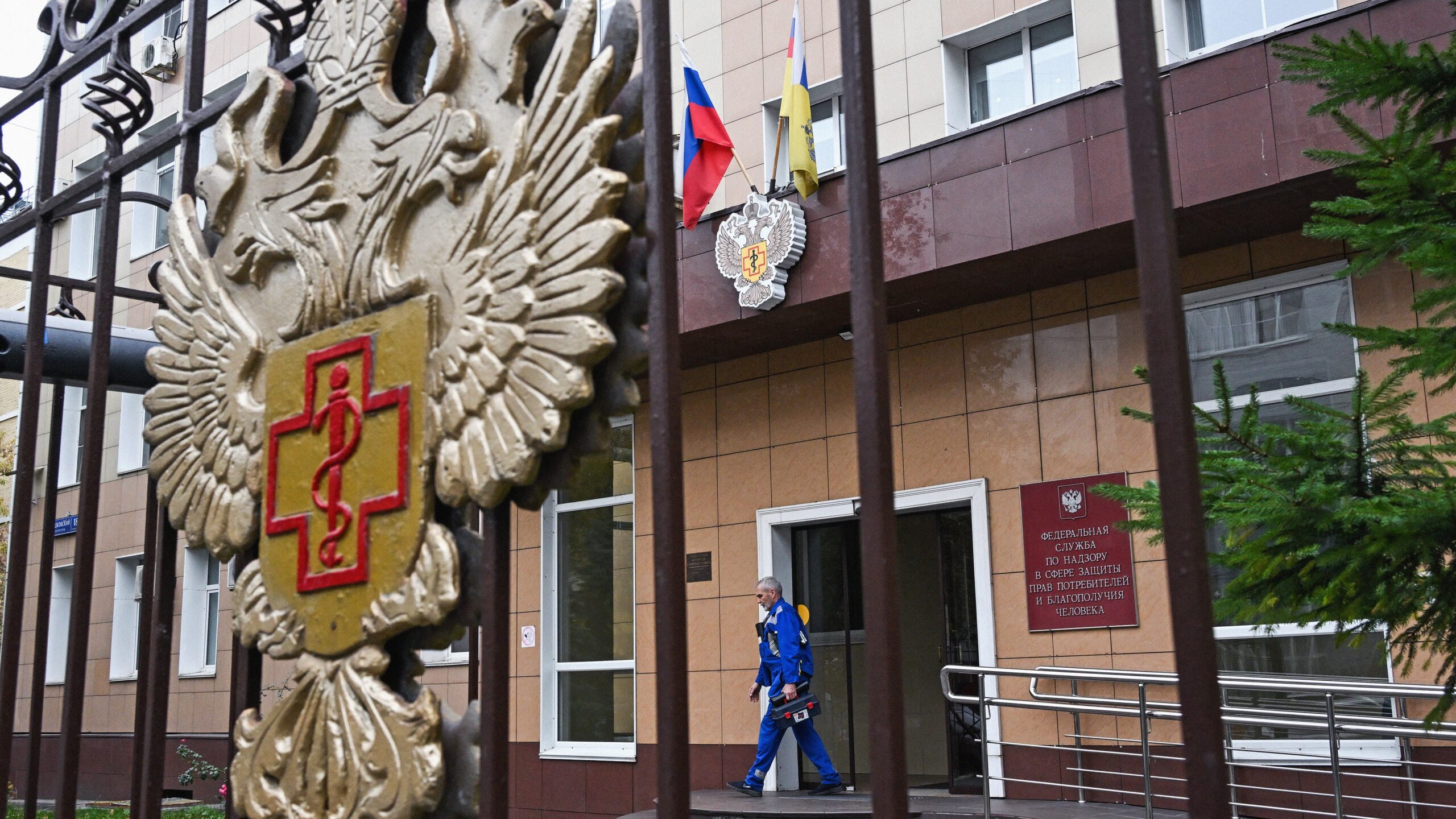
Here’s what is actually known. Sometime in the past week, a woman who worked at the Irkutsk Anti-Plague Research Institute of Siberia and the Far East, not far from the Mongolian border, died of “pneumonia of an unknown cause,” Rospotrebnadzor, Russia’s agency for consumer protection and public health, said Sunday. Government officials have not confirmed her identity, but Russian media have reported that the woman was Daria Shipilova, a 27- or 28-year-old technician at the lab. A local official said that the hospital where she was treated has been placed under quarantine; local media, meanwhile, reported that several hospitals were under quarantine. And Igor Kobzev, the governor of the Irkutsk region, said in a statement on Friday that other people—local media later reported the number as 200—may have been in contact with a resident who contracted an “especially dangerous infection,” and were placed under medical observation. He did not identify the resident as Shipilova or say that the person had died. The public-health agency told state media that “no micro-organisms linked to her professional activity were identified in the patient’s samples” and that no contacts have experienced “health changes related to infectious pathology.” Meanwhile, an aluminum factory in the same town as the laboratory imposed a mask mandate for its more than 2,000 employees, The Wall Street Journal reported.
Plague might sound medieval, but it’s endemic among animals in many parts of the world today. Although Russia hasn’t reported any plague cases to the WHO since at least 2018, Mongolia has. An average of seven cases are recorded in the United States every year, typically from a flea bite or handling infected animals. More than 80 percent of U.S. cases are the bubonic form of the disease, which presents with swollen, pus-filled lymph nodes. Two other main forms of plague, all caused by the same bacterium, are also occasionally reported around the world: septicemic, which infects the blood, and pneumonic, which infects the lungs. Because the lab worker died of pneumonia, speculation that she’d died from plague centered on this last form.
Pneumonic plague is the sole form of the disease that can transmit between humans, but that doesn’t mean it’s particularly likely to spread. David Wagner, the executive director of Northern Arizona University’s Pathogen and Microbiome Institute, told me that the respiratory droplets that can spread pneumonic plague—not to be confused with the tinier aerosols that can spread diseases such as flu and COVID—are only released during a cough or sneeze and only travel about three to six feet. “You have to be in very close proximity to someone with pneumonic plague to contract it from them,” he said.
Because transmission between humans is relatively difficult, the Russian government’s response to the mystery death from pneumonia—placing 200 people under medical observation—is “really incongruent with what you would expect for plague,” Amesh Adalja, an infectious-disease physician at Johns Hopkins University, told me. Daniel Jernigan, the former director of the CDC’s National Center for Emerging and Zoonotic Infectious Diseases, told me that response was “above and beyond” what is typically required for plague cases. Perhaps, he said, the Russian authorities acted out of an abundance of caution; per Reuters, a local official recently said that most of the hospital workers who had been placed under quarantine have already been released.
Even if Shipilova did die of plague, fears of a larger outbreak are probably moot by now. Plague has an incubation period of only one to seven days, so anyone Shipilova might have exposed would have come down with symptoms by now, Jernigan said. Russian authorities have said that no one under medical observation has tested positive for the plague. Generally speaking, the chances of a large outbreak of plague are slim. “Once you have an accurate diagnosis, it’s readily treated with multiple types of antibiotics, which is why we don’t have massive plague outbreaks and pandemics anymore,” Wagner said.
Very quickly, though, some scientists, security experts, and media outlets began speculating that whatever killed Shipilova was not traditional pneumonic plague, but a dangerous pathogen that had been somehow altered in the lab. The fear is that the pathogen could be resistant to antibiotics or other treatments, making it harder to prevent an outbreak. No evidence so far suggests that’s true or that the Irkutsk lab was modifying plague bacteria to make it more dangerous. Still, the host of unanswered questions surrounding this case has paved the way for conjectures about links to biological weapons and for conspiracy thinking about government collusion and vaccine companies set to profit off a plague pandemic.
Some Russian media outlets reported—and international outlets repeated—that the woman contracted the plague after she broke a test tube containing a sample of the disease. (If that was the case, Adalja said, the lab should have followed the standard procedure of prescribing antibiotics immediately after exposure, which has not been reported.) And in the past, the Russian government has worked on bioterrorist agents and hidden the true cause of disease outbreaks. For example, Soviet officials attributed a 1979 anthrax outbreak that killed at least 64 people to contaminated meat. More than a decade later, President Boris Yeltsin admitted that the anthrax had come from a military biological-weapons facility.
The war in Ukraine has increased speculation about planned biological threats. In 2022, the Russian military began refurbishing a Soviet-era laboratory to handle deadly pathogens such as Ebola viruses, The Washington Post reported. “There’s just a standard lack of transparency from the Russian government that adds to the vacuum of information,” Adalja said.
The U.S. government, for its part, has given inconsistent signals about whether it believes that the incident has wider implications. Along with the State Department, the CDC and the Administration for Strategic Preparedness and Response are reportedly working to learn more about the death. But Secretary of State Marco Rubio downplayed the possibility of danger to reporters yesterday, saying, “I don’t think it’s cause for alarm, but it is cause for focus and a cause to just keep an eye on it.” Today, he called on Russia to be more transparent and share more information. President Trump has offered his sympathies to Russia and said that the U.S. will offer help, though he didn’t specify what form that would take. (The White House did not respond to a request for comment.)
The strong public reaction to the death in Siberia can likely be attributed to some surface-level similarities to the early days of the coronavirus pandemic—a mysterious respiratory disease, rumors of a lab leak, an initial response being handled by a secretive government. Still, the experts I spoke with were adamant that pneumonic plague would not be another COVID-19. Plague may not be totally relegated to the history books, but a major outbreak is low on the list of real threats.